
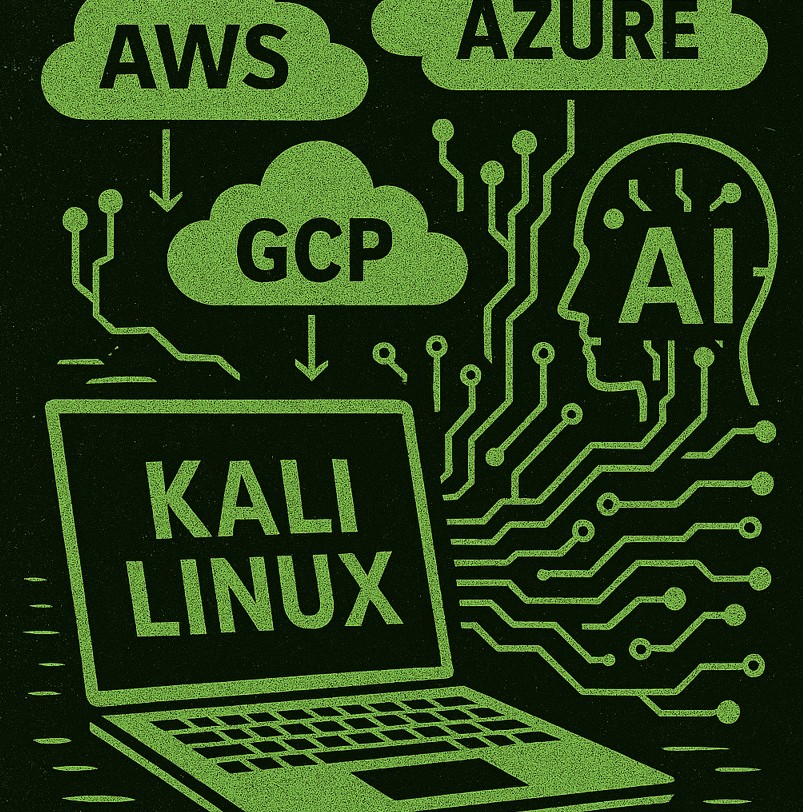
In an era dominated by cloud computing and artificial intelligence, cybersecurity has become both more complex and more critical. Organizations are migrating to multi-cloud environments, deploying AI-powered applications, and relying on consulting firms to secure their digital infrastructure. At the heart of this transformation is Kali Linux—a powerful, open-source operating system designed for penetration testing, ethical hacking, and forensic analysis.
Kali Linux isn’t just a toolkit—it’s a strategic asset. Its integration with cloud platforms and compatibility with AI workflows make it indispensable for modern cybersecurity consulting.
☁️ Kali Linux in the Cloud: A New Paradigm
Kali Linux has evolved from a local penetration testing environment to a cloud-native security platform. Consulting firms can now deploy Kali Linux across major cloud providers to conduct remote audits, simulate attacks, and validate AI-driven defenses.
🔧 Deploying Kali Linux on AWS
AWS offers a pre-configured Kali Linux AMI. Here’s how to launch it:
bash
# Launch Kali Linux EC2 instance using AWS CLI
aws ec2 run-instances \
  --image-id ami-0abcdef1234567890 \
  --instance-type t2.medium \
  --key-name MyKeyPair \
  --security-groups MySecurityGroup \
  --region us-east-1
Once deployed, consultants can SSH into the instance and begin testing:
bash
ssh -i MyKeyPair.pem [email protected]
🧱 Containerized Kali on Google Cloud
For lightweight deployments, Kali Linux can be run in a Docker container on GCP:
bash
# Pull Kali Linux Docker image
docker pull kalilinux/kali-rolling

# Run container with interactive shell
docker run -it kalilinux/kali-rolling /bin/bash
This setup is ideal for short-term engagements or automated testing pipelines.
🔒 Cloud Cybersecurity with Kali Linux
Kali Linux offers over 600 tools for security testing. In cloud environments, these tools help identify misconfigurations, test access controls, and simulate real-world attacks.
🧰 Key Tools for Cloud Security
| Tool | Purpose | Cloud Use Case |
|---|---|---|
| Nmap | Network scanning | Discover open ports on cloud VMs |
| Metasploit | Exploitation framework | Simulate attacks on cloud services |
| Nikto | Web server scanner | Audit cloud-hosted web apps |
| Burp Suite | Web vulnerability scanner | Test APIs and login flows |
| Wireshark | Packet analysis | Monitor cloud traffic for anomalies |
🔍 Example: Scanning a Cloud VM with Nmap
bash
nmap -sV -Pn ec2-xx-xx-xx-xx.compute-1.amazonaws.com
This command scans for open ports and services on an AWS EC2 instance, helping consultants identify potential entry points.
🤖 AI + Kali Linux: A Cybersecurity Synergy
AI is transforming cybersecurity by automating threat detection, anomaly analysis, and incident response. Kali Linux complements AI by providing real-world attack data, training environments, and validation tools.
🧠 Training AI Models with Kali
Consulting firms use Kali Linux to generate labeled datasets for machine learning models. For example, capturing malicious traffic with tcpdump:
bash
# Capture packets for AI training
tcpdump -i eth0 -w attack_traffic.pcap
These .pcap files can be fed into AI systems to teach them how to recognize malicious patterns.
🧪 Validating AI Defenses
AI-based firewalls and intrusion detection systems can be stress-tested using Kali’s offensive tools:
bash
# Launch a simulated brute-force attack
hydra -l admin -P /usr/share/wordlists/rockyou.txt ssh://192.168.1.100
This helps consultants evaluate whether AI systems can detect and block real-world threats.
🧑💼 Consulting Firms: Smarter Security in the AI Age
Cybersecurity consulting firms are under pressure to deliver fast, intelligent, and scalable solutions. Kali Linux enables them to:
- Deploy quickly in any cloud environment
- Automate testing with scripts and containers
- Integrate with AI workflows for smarter threat detection
- Demonstrate value with detailed reports and real-time simulations
📊 Real-World Scenario: Multi-Cloud Audit
A consulting firm is hired to audit a client’s infrastructure across AWS and Azure. Using Kali Linux, they:
- Deploy Kali on both platforms
- Run Nmap and Nikto scans to identify exposed services
- Use Metasploit to simulate privilege escalation
- Capture traffic with Wireshark for forensic analysis
- Feed results into an AI dashboard for visualization and alerting
This approach not only secures the client’s cloud but also trains their AI systems to respond to future threats.
🌍 Community and Open Source Impact
Kali Linux’s open-source nature means constant innovation. Consulting firms benefit from:
- Frequent updates to tools and packages
- Community support via forums and GitHub
- Training programs like OSCP and PWK
- Documentation tailored to cloud and AI use cases
In the age of AI and cloud-native infrastructure, cybersecurity is no longer optional—it’s foundational. Kali Linux empowers consulting firms to deliver intelligent, scalable, and proactive security solutions. Whether you’re simulating attacks, auditing cloud configurations, or training AI models, Kali Linux is the ultimate toolkit for modern cybersecurity consulting.
So if you’re a consulting firm looking to stay ahead of the curve, it’s time to embrace Kali Linux—not just as a tool, but as a strategic partner in the fight against cyber threats.

Amit Arora is a managing partner in cloud practice, helping senior management teams to align their IT service delivery approaches and frameworks. He is also a father, coach, and influential thinker. He has over two decades of expertise using creative and cooperative methods to serve Canadian and international clients on various cloud integrations and cybersecurity. Amit has devoted the last few years to building up cloud portfolios that cover a wide range of technologies. He earned his master’s degree from the University of New Brunswick, Canada and many certificates relevant to his line of employment. LinkedIn Profile